Transformational Leadership: Lessons from Mike Shildt and the Padres
- Jasminh Nguyen
- Oct 18, 2024
- 4 min read

Transactional and Transformational Leadership
When it comes to leadership, would you prefer a leader who focuses on clear expectations and rewards for achieving goals, or one who inspires growth and motivates you to reach your full potential? If you lean toward the latter, what you truly need in your life is a transformational leader, not a transactional one.
To better understand these concepts, let’s break down their meanings: a transaction involves an exchange, whereas transformation initiates change. Both terms apply directly to leadership styles.

Transactional leadership operates on a top-down approach, where leaders primarily respond to situations and ensure tasks are completed through a system of rewards and penalties. This style emphasizes structure and consistency but often lacks flexibility to adapt to changing circumstances. It's a responsive form of leadership focused on maintaining order rather than driving innovation.

On the other hand, transformational leadership seeks to inspire and empower individuals to reach their highest potential. Leaders who adopt this style motivate their teams through personal influence, individualized support, and a shared vision. They push their followers to go further, challenging them to embrace change and strive for continuous improvement.
A real life figure who is a transformational leader in my eyes would be Mike Shildt.


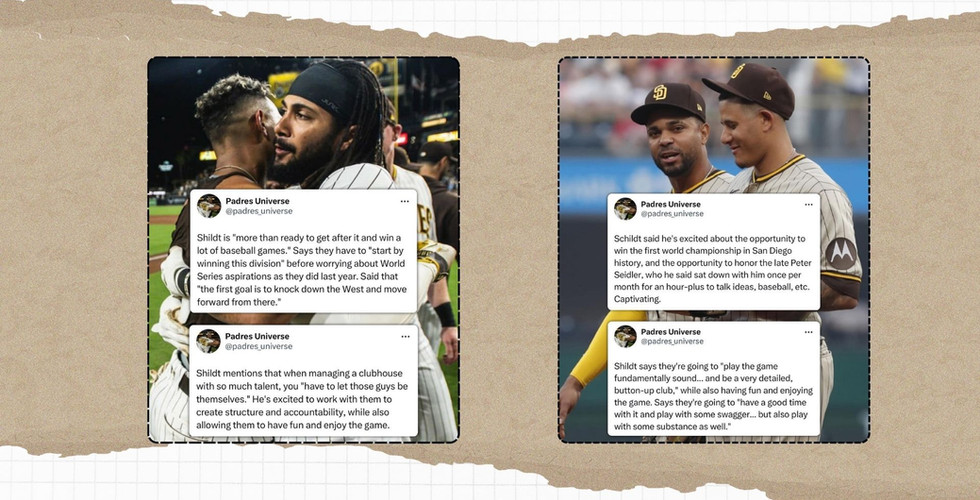


From someone on the outside looking in, it’s clear there’s a different energy since Mike Shildt has joined the Padres. You can really see it on the field, too. The players have noticeably more chemistry and synergy compared to last year. They seem to connect better, both on and off the field, and it’s reflected in their gameplay.
Not only that, but the team finished the season with a stronger record than before. This improvement isn’t just about the numbers; it’s about how the players are approaching the game and how the coach is approaching the players. They’re more engaged and working together, which is creating a more dynamic and exciting atmosphere. Overall, Shildt's influence has brought a refreshing change that’s clearly making a positive impact on the team.
Embracing Technology in the HTM Industry
The hospitality and tourism industry has seen rapid advancements in technology, especially in response to challenges like the COVID-19 pandemic. As a consumer and someone working within the industry, I’ve witnessed firsthand the rise of contactless services and digital platforms. While these innovations bring undeniable benefits, they also come with potential challenges.
Self Serve Kiosks at Restaurants and Robots?
Many restaurants are adopting self-serve kiosks that allow guests to place orders and make payments without needing a server or having to speak to someone. This adaptation can be seen as successful as it reduces wait times, but I think it ultimately depends on the structure of the restaurant. In a fast-casual environment, I appreciate the convenience, control, and ease when it comes to ordering. Some food establishments can also benefit from this by reducing labor costs since there is one less role to fill. On the other hand, I can see how people may not find this type of service appealing. Some guests miss the human interaction, and there’s the occasional frustration when technology doesn’t work as expected.
Texting/Online Chatting Services at Hotels
My hotel offers an "e-butler"service where guests can text their questions or requests and express check out without having to come to the desk. I’ve experienced similar services as a guest at another hotel and found it incredibly convenient. It’s nice to skip the formality of a phone call and get what you need quickly if you can simply just text. There are some drawbacks, however, because sometimes a guest might have a question and we could get busy in the lobby, so there could be delays in response times. And since we are real people answering back, sometimes we misspell or have typos in our conversations with guests which can be seen as unprofessional. I do know that a lot of the introverted guests who stay at my hotel love this feature because there is no face-to-face contact.
Digital Room Keys
The implementation of digital room keys has become widespread in the hotel industry. My hotel does not offer this service, however, I have seen a rise in guests who prefer this format because they ask us if the keys are physical or digital when they check in and are unpleased by being handed a physical key. I can see how digital keys can offer convenience, security, and eliminates the occurrence of guests losing traditional keys. But I can also consider the situation when a guest’s phone dies or they can’t get the app to work. In those moments, technology can be more of a hassle and might not be preferred by the older gen guests who stay at the hotel.
Mobile Check-Ins
Many hotels now offer mobile check-in options, allowing guests to check in through their smartphones. I can see how as a guest, it’s fantastic to avoid long lines in the lobby. But I can also understand how this might not always be user-friendly for everyone. Some guests may struggle with navigating apps or feel more comfortable with the traditional check-in process. It could be more convenient, but not as accessible and that is something to consider.


Comments